Many of us have our own little (or large) ensemble of cameras that we have accumulated over the years. Some we have hardly used in recent months, or even years. Each with its own little special something that has kept us from putting them on sale. Unless your aim is to be a collector, this tends to become a problem sooner or later.
Affectionately, the term GAS or Gear Acquisition Syndrome has been coined to describe this, shall we say, affliction.
In medical terms, the closest name would be camera-mania.
It is a real problem. Something of an addiction. Credit card debt. Concealing purchases items from spouses. Winning an auction on ebay for something you really don't need or even want. Not being able to resist a "deal." These are all "humorous" stories you commonly hear on many online forums.
Not only that, it interferes with your actually improving as a photographer. Kinda like Tiger jumping around from Callaway to Taylormade to Ping, and so on.
Fortunately, I think I have found a solution, at least for myself (disclaimer). Reverse psychology. Huh?
One day, I looked at the stuff I had, and realized that if I put these all together, I would have enough for a really good camera and a handful of lenses. Really good ones. Ones that I have always thought to be too expensive or excessive. Ironically, this turned out to be an example of "false economy."
My wife asked, "Why don't you get something you really like, and get rid of the rest?"
So, to make a long story short, I thought of my "dream camera." Then I sold off enough to buy it. I still have a bit of the old stuff, but you know what? Now they do not appeal to me as much. I have been able to "let them go" and have started to sell them to new owners who will hopefully put them to good use.
One thing I can say is that I have used each and every single camera I have owned. Not only that, I know them inside out. In retrospect, it was a lot of fun learning about them, restoring them, using them, and appreciating them. It was part of the fun. Part of the hobby. Without going through this process, I don't think I could have figured out for myself what it is exactly that I like. I would not know what I know now. And now it is time to move on.
Yes, I will be holding on to a handful of favorites, just for some variety, but that's it. I'm done.
Yes, I bought an expensive camera, and my wife could not be happier.
Wait a minute... come to think of it, I think she planned this all along...
4.04.2007


3.29.2007
Perspective

Like I said, most folks in Morocco are averse to having their photograph taken. How did I deal with that? One effective way was to try talking to them. Not many spoke english, however.
I had a whole bundle of ballpoint pens in my pocket. The ones the pharmaceutical reps give away. I handed these out to the locals. For some reason, these were a big hit. The bigger the name of the particular drug embossed on the pen, the better. I don't know why. Maybe they have a scarcity of pens there. Maybe they just appreciate the token kindness. The one in a thousand tourists who didn't just try to snap a photo.
At work, we just throw these pens away, most of the time.
That's one of the things I like about travelling. It puts things in perspective.
3.27.2007
Play it again, Sam
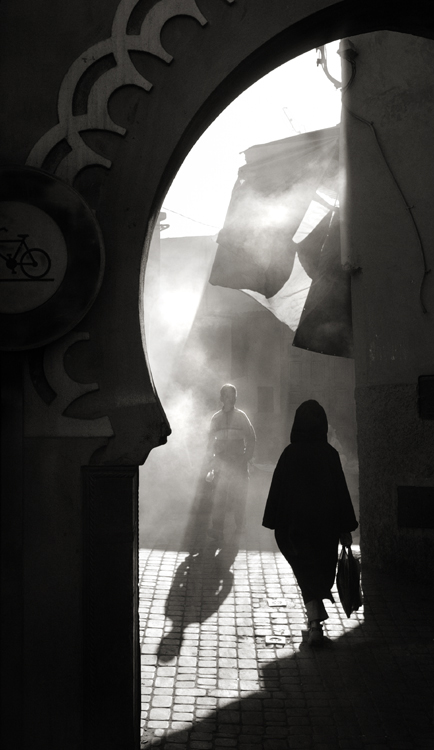
I know. I promised not to do any corny Casablanca (which, by the way, was filmed entirely in Hollywood) quotes.
Just returned from Morocco. Casablanca, Fes, Rabat, and Marrakech. An amazing country, especially for photography. A bit challenging, though, since most of the people, particularly women and old men, absolutely refuse to have their picture taken. I asked a couple of people why. It was not because of religion, as I had thought, but rather because they were concerned that the photos would be misused, against Islam. This had apparently been a problem with the media and the internet. Sad.
Morocco is full of contrasts. Couscous for lunch, with french pastries for dessert. The modern Nouvelle part of the cities, and the preserved ancient medina. Beggars in the alleyways, and 20 million dollar homes (including those of Bruce Willis, Madonna) in outskirts of Marrakech. Women with face veils, and discos rocking till 7am.
Our guide, Mukhtar, was a friendly, funny, and knowledgeable guy. He was also a movie buff. Morocco has apparently been a favorite for Hollywood. A few of the films shot in Morocco: Lawrence of Arabia, Alfred Hitchcock's The Man Who Knew Too Much, as well as some scenes from The Birds, and Patton. More recent movies: The Mummy, The Mummy Returns, Kingdom of Heaven, Gladiator, Babel, Black Hawk Down and Hidalgo.
Another trivia tidbit: Morocco is the only Arab nation that was not conquered by the empire of the Ottoman Turks.
An amazing trip.
My Morocco set on Flickr.
3.05.2007
Bad to the Bone
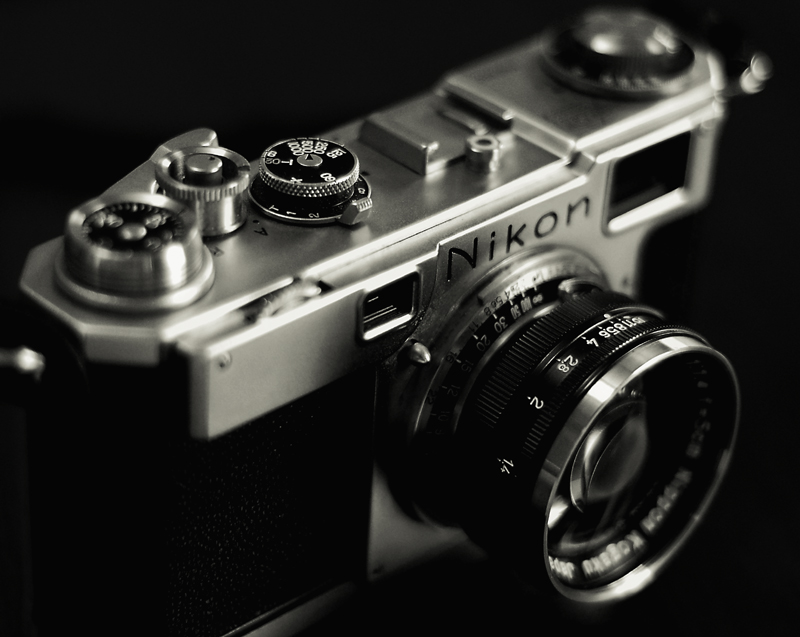
I have to admit, this is one cool-looking camera. It's the one that goes well with a worn-out wide black canvas journalist strap from the 70's. And with ripped jeans. It has attitude. A harley. If Leica was from Venus, this guy is definitely from Mars.
A little history: the camera is Nikon's S2 rangefinder. Made in the 50's, from an age before Nikon made it's first SLR, the Nikon F. This is the Black Dial version. Mine is probably one of the latest ones, with serial #61928XX.
If it looks good, it is made even better. Robert Capa had a Nikon RF around his neck when he stepped on a landmine in Indochina. The camera was blown away, but still intact and working.
Some other things I like about it:
- Mechanically, it is more "modern" than its Zeiss counterpart. Film loading is easier, for one. It also has a film advance lever and lever rewind, faster than the old knobs. It also has the conventional frame spacing on the film (unlike Kievs and Contaxes which are a pain to scan if you use a negative scanner).
- Uncluttered, bright 1:1 viewfinder.
- The camera shares some mechanics with the Nikon F (or vice versa, rather), so parts and repair are easier than, say, a contax. Also, the Nikon's shutter is simpler, more robust, and more reliable.
- It's long rangefinder base length makes focusing more accurate.
- Glass. Well, I just have one lens so far, the sonnar-formula Nikkor 50/1.4. This is the reason I bought the camera. I had been wanting to try this lens, but it is difficult to find, and costs quite a bit in leica thread mount. Lens adapters are either ridiculously expensive (for the original collectible versions), or only a little expensive if you get them from Hongkong. QC is a gamble, though.
- In general, the lenses are less expensive than their LTM counterparts. As long as you don't get carried away with the more sought-after collectible lenses. I have had the 105/2.5 and 85/2 in Leica mount, and they are very impressive.
Right now, my dilemma lies in the collector value of Nikons. I got this from another RFF'er a few months ago, just before the start of the RFF Nikon craze. The camera I bought came as a kit, with paired lens, original cap and shade, case and strap, accessory strap, film canisters with leather holders that go on the strap, same with lightmeter and case that threads on the strap. It even came with a fan-type flash, instruction manuals for the camera and meter, and a book about Nikon Rangefinder photography. The camera has hardly been used, and is working well with no need for a CLA. Should I sell the kit and look for a "beater?" Or should I just pretend I stepped back in time and enjoy it?
Some other Nikon S2 resource pages:
- Nikon Web
- Photoethnography
2.26.2007
Winter Break
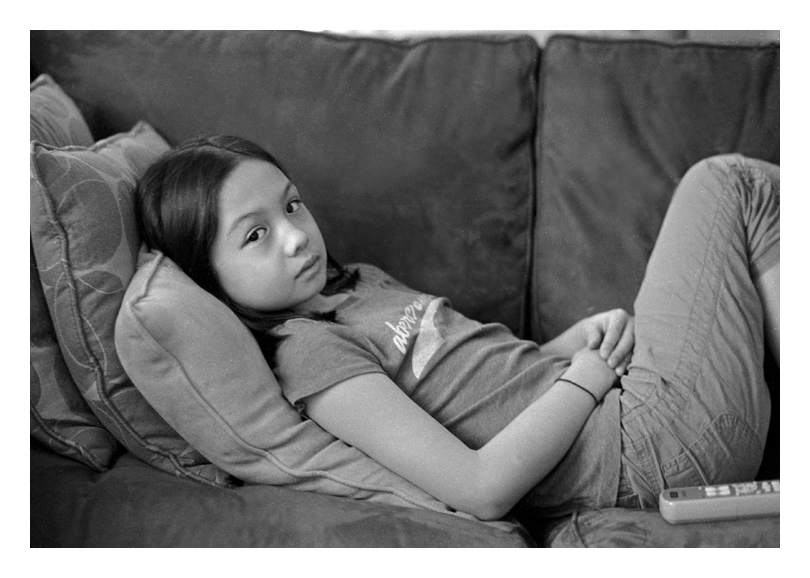
Leica M3 + Nokton 50/1.5, Agfa APX100 in Rodinal
After I shot this roll, the kids asked to see the back of the camera looking for the pictures on the LCD!
"You want to see the pictures?" So they helped mix the Rodinal and process the film. Mikey was the timer, and Rica did the inversions.
Of course, they were instructed on proper handling of the chemicals. Like not to drink it or splach each other...
Later, we cut the negs, scanned and edited them on Photoshop.
Of course, when mom arrived they could not wait to tell her all about it. And how dad let them mix "dangerous chemicals."
This was a pretty amazing week. With that activity, the kids really got into it. We decided to drive to the beach the following morning to take some pictures. Rica surprised me - she wanted to shoot with film! A few posts down, you will remember that she took to shooting digital with the GRD in New York.
Well now, what camera to use? Mikey has his p&s from the cruise. He still loses stuff.
Rica brought me her camera - an old Chinon 35EE complete with box and flash that I got her several months ago from a forum member - which needed some cleaning. We cleaned the finder and tested the meter with a hearing aid battery. We stripped the old gunky light seals. Somehow, I could not for the life of me, find my replacement seals.
Now this was a problem. I had her try out some other cameras, including an Olympus 35RC. I wanted to give her something with full autoexposure for now. She settled on an SLR - a nice simple Canon T50 that I got as part of a package a couple of years ago on ebay.
It paired up nicely with a bright 50/1.8 SC FD lens. She picked an orange disney camera strap from my closet to go along with her new kit.
The following day, she was up and dressed by 8am.
We loaded some tri-x in each of our cameras, and off we went. It was freezing cold, expecially with the brisk sea breeze. The beach was deserted, of course, except for a big flock of seagulls. Mikey was back in the car after 5 minutes. Rica was bundled up in a scarf, bonnet and gloves, and finished her roll.
We warmed up with some hot chocolate and a big breakfast at Copper Skillet, the local diner.
That afternoon, we processed the film (in HC110). This is a new combo for me, and the negs were a bit grainier than I liked, but who cares? This was a perfect day.
Rica's photos:
 I wish I had her eye for composition when I was 9.
 A very RARE picture of her daddy. Yes, that is snow on the beach.
I put together a flickr set for her. I have a feeling there will be many more to come.
"You want to see the pictures?" So they helped mix the Rodinal and process the film. Mikey was the timer, and Rica did the inversions.
Of course, they were instructed on proper handling of the chemicals. Like not to drink it or splach each other...
Later, we cut the negs, scanned and edited them on Photoshop.
Of course, when mom arrived they could not wait to tell her all about it. And how dad let them mix "dangerous chemicals."
This was a pretty amazing week. With that activity, the kids really got into it. We decided to drive to the beach the following morning to take some pictures. Rica surprised me - she wanted to shoot with film! A few posts down, you will remember that she took to shooting digital with the GRD in New York.
Well now, what camera to use? Mikey has his p&s from the cruise. He still loses stuff.
Rica brought me her camera - an old Chinon 35EE complete with box and flash that I got her several months ago from a forum member - which needed some cleaning. We cleaned the finder and tested the meter with a hearing aid battery. We stripped the old gunky light seals. Somehow, I could not for the life of me, find my replacement seals.
Now this was a problem. I had her try out some other cameras, including an Olympus 35RC. I wanted to give her something with full autoexposure for now. She settled on an SLR - a nice simple Canon T50 that I got as part of a package a couple of years ago on ebay.
It paired up nicely with a bright 50/1.8 SC FD lens. She picked an orange disney camera strap from my closet to go along with her new kit.
The following day, she was up and dressed by 8am.
We loaded some tri-x in each of our cameras, and off we went. It was freezing cold, expecially with the brisk sea breeze. The beach was deserted, of course, except for a big flock of seagulls. Mikey was back in the car after 5 minutes. Rica was bundled up in a scarf, bonnet and gloves, and finished her roll.
We warmed up with some hot chocolate and a big breakfast at Copper Skillet, the local diner.
That afternoon, we processed the film (in HC110). This is a new combo for me, and the negs were a bit grainier than I liked, but who cares? This was a perfect day.
Rica's photos:
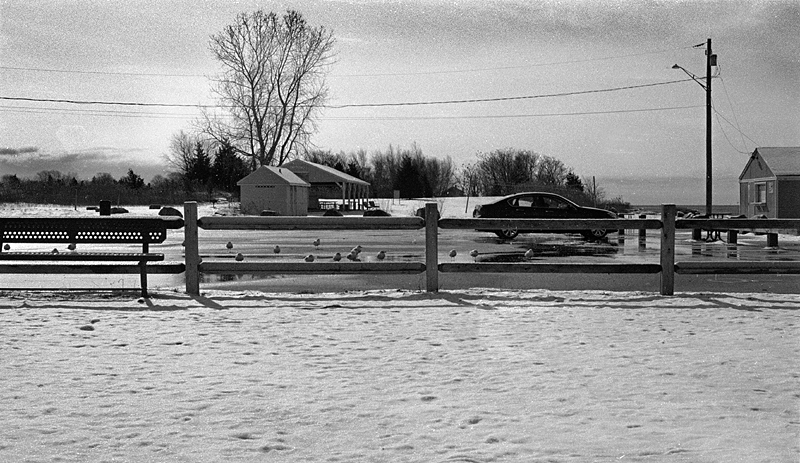 I wish I had her eye for composition when I was 9.
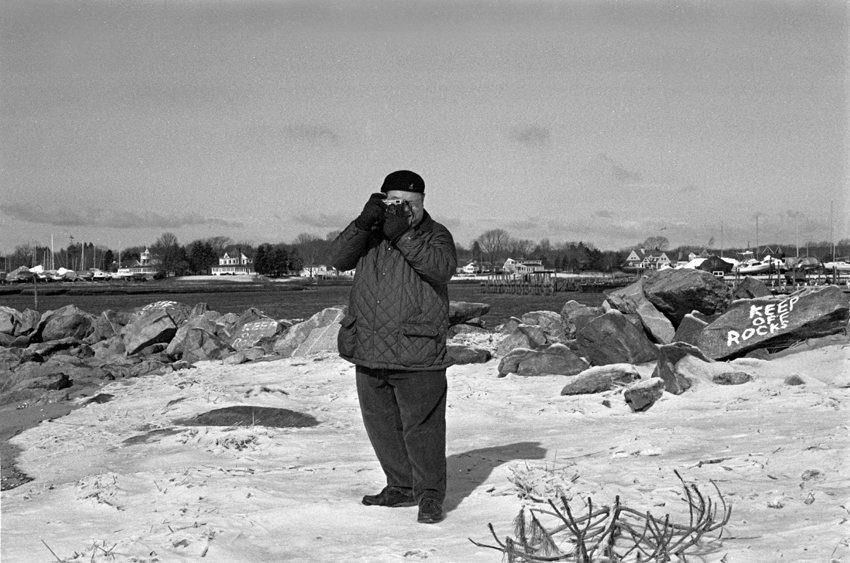 A very RARE picture of her daddy. Yes, that is snow on the beach.
2.21.2007
Dynamic Range
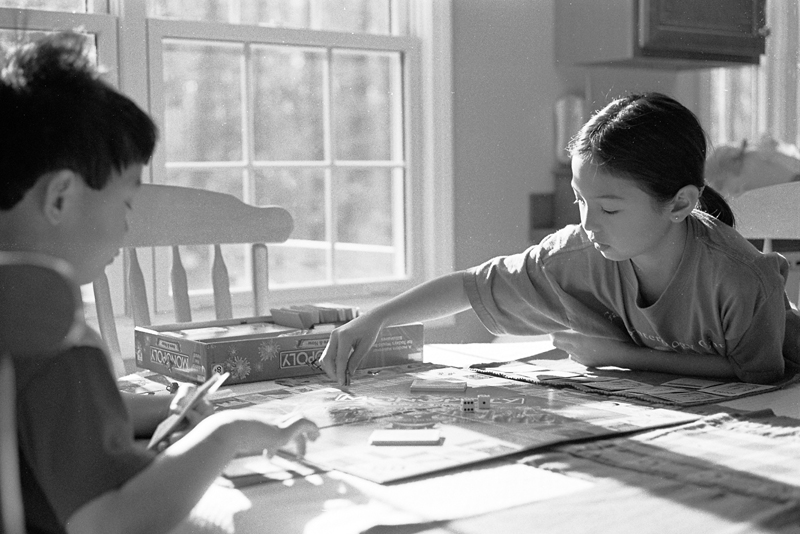 Monopoly
Leica M3 + 50mm Summicron, Agfa APX100 in Rodinal
I took several shots of this scene with a Nikon DSLR. It was an exposure nightmare. I was bracketing, using the spotmeter, checking histograms on the LCD. In the end, it was a choice between blown-out highlights or blocked up shadows. I tried to save it on Photoshop with masks and layers, but still ended up very frustrated.
The same time the following afternoon, the kids were at it again (yes, I know, they have JUST discovered Monopoly). I remembered that I had a few more shots left to finish the roll of Agfa APX-100 in my Leica M3. I took an incident reading off my daughter's face, and fired away.
2.15.2007
Leitz Summar
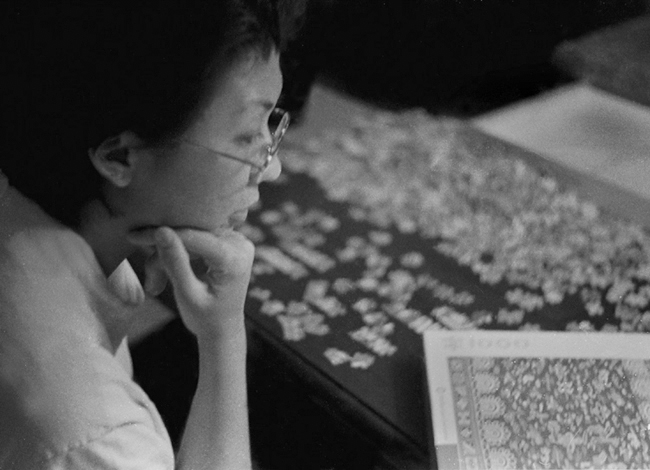
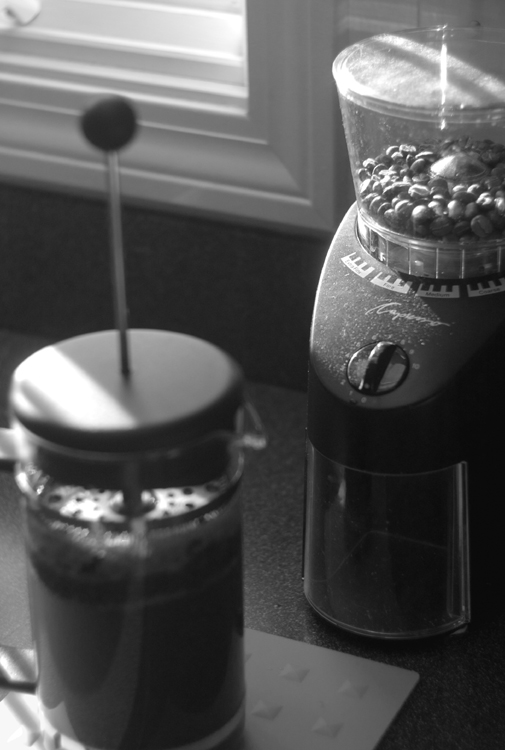
Here are a couple of ordinary shots with a 1934 vintage uncoated Leitz Summar 50mm lens. One was taken with a leica IIIF and Plus-X film, the other with an R-D1.
Perhaps you can tell one from the other. But for me, they both show off the lens' character beautifully. And they look pretty close.
I love how the RD1 files do not look artificial or digital. I guess the term used to be 'plasticky' but nowadays, after you spend megabucks on a digital body, I think the term is "3D."
2.12.2007
Sometimes
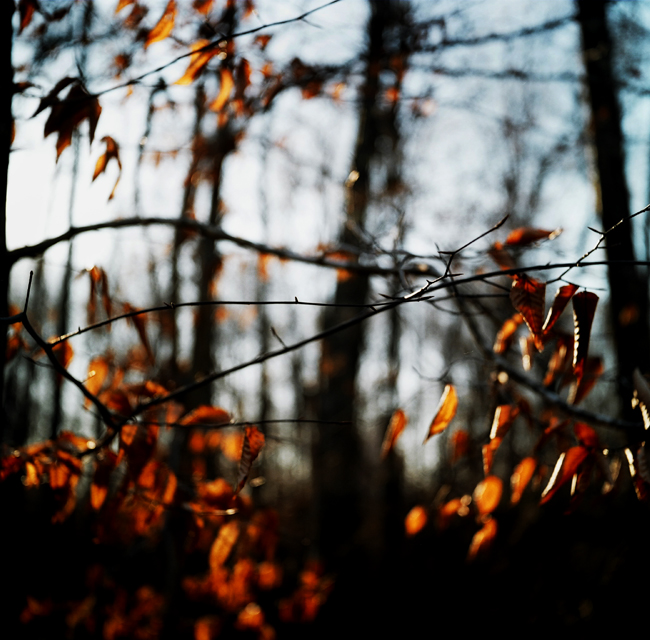
...I just look at the play of colors, or the way the afternoon sunlight glints off the leaves. Nothing special, nothing in particular, I just look. And for some reason, my eye just keeps getting drawn to a little nub when a leaf once was.
2.10.2007
Parting Shot
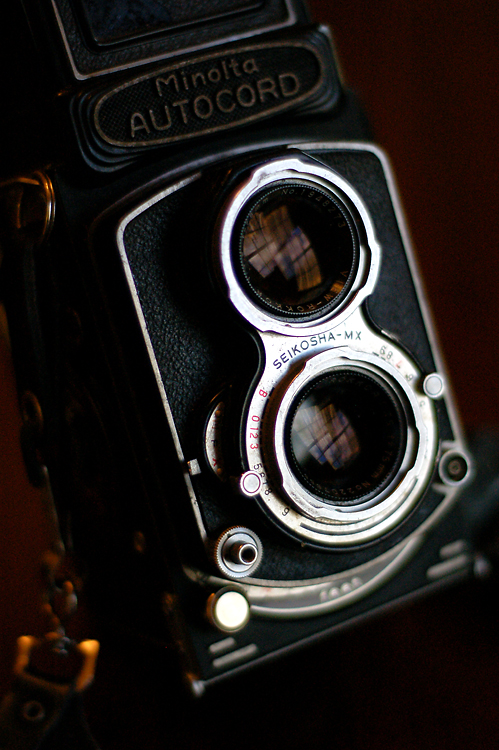
The Minolta Autocord is truly a fine camera. The legendary lens is sharp. The innovative loading kept the film plane flat, a groundbreaking departure from the Rollei design. And despite its age and cosmetics, mine was a well-functioning sample. Cosmetically, it is a bit rugged, but with my hippie strap, it looked totally cool.
It was simply a matter of the right camera at the wrong time. I tried to content myself with scans from the lab, since my dedicated film scanner is only for 35mm. My enlarger in the darkroom is a Leica Focomat, also for 35mm.
I toyed with the idea of getting an inexpensive flatbed scanner. but I am afraid I will just constantly dismay at not realizing the full potential of the larger negative. This has been a nagging problem, even with 35mm. When I shot some velvia slides recently, I was shocked to see the disparity between what I saw with the loupe and projector, versus the scanned image on my computer screen. And this was with a dedicated film scanner.
A new enlarger? I think the direction I am heading is away from that.
I am happy, however, that the person who bought the camera is a photography teacher in Massachussetts. This camera deserves to be put to good use. And if a student or two gets hooked by this little old wonder, so much the better.
2.05.2007
Subscribe to:
Posts (Atom)