Photography is an expensive hobby, everybody knows that. Why is that, when, with the advent of digital, a good film SLR and zoom or good standard lens can be had for very little money nowadays? Even DSLR prices have come down significantly. With digital, you don't even have film and processing costs. Why then?
The problem lies when the hobby turns into an obsession with gear. I have seen it happen over and over again. It is not a new phenomenon either. I remember, years ago, when I would read incessantly about which were "the best" lenses for XXX camera brand, there was always an oldtimer who proferred the admonition to "shoot with what you have" and that the search for the "best" lens was an expensive, futile quest, often leading back to where you started. Of course, I did not listen. I don't think anyone does. This circuitous quest is, I think, something most have to go through themselves.
The first stage is usually an obsession with brand. Canon makes the best digital sensors. Leica makes the best lenses. And so on. Everyone knows that, right?
At least back then, everyone started with a Pentax K1000. Then "upgraded" (a bad and expensive word) to Canon or Nikon. From there, the allure of German makers Contax/Zeiss and Leica.
The second stage is an obsession with specs. Camera specs. "This is a good entry level camera, then you can upgrade to a midlevel Nikon F100 once you decide what features you need." Well, what features do you really need? I know I need a shutter speed dial, an aperture adjustment ring, a shutter release, and ok, maybe even a meter. But at that stage, I spent hours poring over camera specs, to see if I should spend a little more and get mirror lock-up and 1000 zone matrix metering instead of "only" 200 zones. Inevitably, this is the stage of reading magazines like Pop Photo and Shutterbug.
So now you've got your camera and a decent kit zoom. Then you realize that your vacation photos don't look like those pictures in the National Geographic. You read more, this time on the internet, since the guys at Pop Photo favorably endorsed your kit zoom (what don't they?). Of course! I need a new lens. I need a "pro zoom." This is typically "fast" with an f/2.8 fixed aperture, covering the focal lengths I need from wide to telephoto, and weighs at least a pound.
Ok, now we are talking. At this stage, you now realize that you cannot possibly travel or go on a shoot without "covering" every possible focal length. So you buy a similarly fast superwide zoom, and an even heavier telephoto zoom. So now, you would have, typically, something like a 16-35/2.8, 28-70/2.8, and 80-200/2.8 (of course with IS or VR) in your bag.
You start experimenting with low-light shots and realize your pro zoom doesn't quite cut it. You need a fast prime lens. You start with a 50/1.8. Then another "upgrade" to a 50/1.4 for "those times when it is f/1.4 or no picture." You will hear this again and again in this "quest."
Wow, the narrow dof really makes a difference. You figure you need something similar for portraiture. An 85/1.8 is within your budget. Then an 85/1.4 or better yet, if you shoot Canon, an 85/1.2. For times when it is f/1.2 or no picture...
Same thing with wides. A 35/2 for shooting street. Then a 35/1.4. For indoors - a 24/2.8 becomes a 24/2, becomes a lusting for a 24/1.4.
Sharpness is king at this stage. The end-all and be-all. You are obsessed with MTF's. You spend hours looking at photos online, to see which lens is sharpest. 100% crops of corners.
Some will go on to a larger format.
You are taking pictures, mostly of the same subject, not because of the subject itself, but just to compare the lenses you have.
Then you figure, changing between the myriad lenses in your (now really heavy) bag can be a hassle. And what if the camera breaks? You need a "back-up" body. Typically, you also justify this by using different film in that body - maybe faster, maybe black and white, maybe both.
And there you are, with your big heavy bag full or pro equipment, shooting photos of your kid in the backyard. At least you have a back-up handy.
At this point in the game, you start wondering - "What makes Zeiss and Leica so special (read expensive)?" You decide you need an adapter, and go get some german lenses for your canon.
Then you find yourself intrigued by the whole "mystique" surrounding rangefinders. Usually this is because, at this level of being a "serious amateur" you start reading photography books. No longer the "how to" books you graduated to from Pop Photo. No. Now you are obsessed about the "decisive moment." You decide you need to be invisible and get more connected to your subject.
You have reached the zenith of technical gimmickry, and now you are on the downward spiral of ascetism. You shun lightmeters, preferring to guess the exposure by eye. You carry a cheatsheet in your pocket. Nosirree... just give me the basics - aperture, shutter speed, wind lever, focus and shutter release.
You wet your feet with a compact 35mm rangefinder. The Canonet GIII QL17 and Yashica GSN are popular choices. Not only is your photo sharper than your kit zoom, it may even be sharper than your heavy pro zoom. You are liberated by the experience. The simplicity.
"How can this 30 year old camera make sharper (usually 4x6 drugstore) prints than my plastic wondercamera (with the 1000 zone matrix meter and all-important mirror lockup)?" You get hooked on vintage equipment. They are much, much cheaper than your pro SLR equipment. Ebay becomes your friend. So does the mailman.
After you have gone through every possible cult fixed lens RF, you now decide you need interchangeable lenses. Russian Zorkis, Feds, and Kievs come next. The lenses are good! The bodies are unreliable. You move on to modern Voigtlander Bessas and vintage Canon rangefinders like the P. At this stage, you are reading internet sites like Karen Nakamura's and Dante Stella's, discovering the vintage cameras.
You find like-minded people online. "I am not alone in my gear lust." You buy and sell with your new friends. You feed each other's vices.
You spend a bit more money on your lenses. You progress from FSU to vintage Canon and Nikon RF lenses. Oh... the quality construction! The beautiful glass. Maybe Leica is better? An older LTM does not cost much more...
You hold your first leica lens. "Oh my God, now I understand."
You start accumulating standard lenses: Summitar, Summar, Elmar, Summarit.
You get an old Leica body - an inexpensive Barnack. Another "Oh my God" moment.
35's and 90's follow. And viewfinders.
Now you need a modern, reliable body. An in-camera meter "may" be useful, you concede. You are getting tired of the squinty finder, and accessory VF's. A bigger, brighter viewfinder is needed. And easier film loading than the barnack. A bessa.
From there, you decide to spend a bit more money, but Leica is too much. Best bang for the buck - CV lenses. More recently, another slightly more upscale choice was added - Zeiss Ikon.
From here, if you choose to continue on this quest, there is only one way to go: the Leica M.
You may start with an "inexpensive" lens, typically 50mm Summicron, to mount on your Bessa or other. Maybe an older collapsible or rigid. Then a more modern formulation. You "definitely see" the difference in your photos. The clarity, the "glow," the rendering, how it paints with light. The magic.
Or you may decide to start with an M body for your fast accumulating FSU, CV, and Canon/Nikkor glass. You probably start with an older one - M3 or M2. You hold your first M body. You wind the lever. You click the shutter. You almost pee in your pants.
"Oh my God."
From there, it gets bloody, $$ wise. Different focal lengths - 15, 21, 24, 35, 75, 90. You are hooked. You are shooting in low light, hand holding at obscenely slow speeds. You need faster - Summilux or faster. "For when you need f/1.4." Maybe a newer M body. More reliable, right? The older M becomes the back-up.
Hopefully, all this time, you have been shooting, and shooting. Learning. Improving your craft. You have also been honing your darkroom/photoshop/printing skills. Your photos are well-received, sometimes even admired. You may have even sold a few prints.
And then one day, it hits you. You wake up to the realization that your multitude of gear actually has been getting in the way of your development as a photographer. Much the same way as it would if Pete Sampras used a different tennis racquet every day. Or Schumacher drove a different car on each race.
"Less is more."
"You need to be one with your camera."
Zen.
So... you need to pare down your equipment. To keep only the best. The ultimate. But which one is "best?"
Another realization: there is no "best." Best is what works. What you are comfortable with. Which gives you the result you are after. Consistently. And since you have the luxury of being an amateur - best is what is fun, what gives you satisfaction.
Now you are shooting photos for what is IN the photo. You realize that the subtle differences between lenses that (usually only) you and your equally geeky online camera friends noticed are not really what is important. A lot of times you (and they) can't even tell these apart.
What I consider my "best" photo so far is a beautiful photograph. A lot of people admire it online, and even more love the print. Lovely light, beautiful subject, good composition. A case of being in the right place at the right time. Something non-repeatable.
I shot it with a plastic camera and a $60 zoom. With cheap ISO 200 drugstore brand color film. Processed in a 1-hour lab, scanned and converted to black and white on photoshop.
Many people assume I used a Leica camera and lens, and wax poetic... I have been too amused to correct them. I remember that as a lesson in what is actually important, and what are just foolish pretensions of gear fetishists.
A good photo is still a good photo even if shot with "lesser" equipment. Conversely, a poorly composed picture cannot be saved by a $2500 Asph lens. Try it - let your ten year old son shoot with your leica's (get insurance) and shoot with a Canonet. If your pictures suck, guess what, YOU suck.
You are still shaking your head? "A good photographer will make a better photo with better equipment" is another thing you will read on the internet. Usually on Leica forums. Ok, ask yourself:
a) Are you that good?
b) If you answered "yes" to a), do other people think you are good or is it just you?
c) Do you think Winogrand's photos would look better if, instead of an M4 + Canon 28/2.8, he used an MP + 28 Summicron Asph? How about if HCB used an Asph Lux instead of his collapsible summicron? Or Capa with a millenium Nikkor 50/1.4? Can you distinguish which shots Ralph Gibson took with a pre-ASPH vs ASPH Summilux, and if so, is one better than the other?
If you think "yes," you need to renew your subscription to Popular Photography.
Or maybe you are shaking your head because you think you are immune to this "disease?" A simple test: Ask yourself, if you won the lottery tomorrow, what one camera and lens would you buy? Enough said.
So what stage in this vicious cycle are you in? Are you coming, or going?
Of course, the usual disclaimer applies: YMMV. Your experience may be different, especially if you have will power and self-discipline. But I have seen this happen (to different degrees) enough times and at different levels to believe that this must be some rite of passage. After all, I don't think any "serious amateur" I know is still shooting (only) with his first camera (and has not "upgraded.")
A fun but expensive quest. And we didn't even get started with digital!
Just remember, like the holy cup, the "Grail" is within. YOU make the photos. But of course, you won't believe me. You will need to figure it out for yourself. I told you so.
2.01.2007


1.22.2007
PAW = Pain in the Ass in the Winter
I think this whole Picture-A-Week (PAW) thing is paying off, mainly as an incentive to get off one's duff. Especially now that it is very cold out. Talking about cold, yesterday I made plans to head out early this morning. I was planning to walk along the beach, which should be quiet and deserted this time of year. The kids were coming along, and I had charged some NiMH AA batteries for the Olympus for them to use.
However, it would not be so. Early this morning, the furnace conked out. We huddled in the family room around the fireplace, and with a couple of space heaters blasting away. After the service guy fixed it, we were just too frozen to go anywhere.
Later today, I went around the outside of the house to open the faucets and drain the pipes. There's a stream running around our property, about a couple of hundred feet into the woods from our house. It was partly frozen, and the ice was reflecting the sunlight very nicely. I had been browsing through Paul Caponigro's Masterworks from Forty Years this weekend, and I have to say, your frame of mind does influence what your eye tends to see.
So, there I was in the woods, in my pajamas and a heavy coat, in 20F weather. If not for the extra oomph of incentive to shoot this week, I would have had my feet up beside a nice cozy fire, like a normal person on a cold Sunday morning.
Personally, I think Caponigro's best photographs of New England were the ones he took around his home in Redding, Connecticut. I wonder if he shot those in his PJ's?
However, it would not be so. Early this morning, the furnace conked out. We huddled in the family room around the fireplace, and with a couple of space heaters blasting away. After the service guy fixed it, we were just too frozen to go anywhere.
Later today, I went around the outside of the house to open the faucets and drain the pipes. There's a stream running around our property, about a couple of hundred feet into the woods from our house. It was partly frozen, and the ice was reflecting the sunlight very nicely. I had been browsing through Paul Caponigro's Masterworks from Forty Years this weekend, and I have to say, your frame of mind does influence what your eye tends to see.
So, there I was in the woods, in my pajamas and a heavy coat, in 20F weather. If not for the extra oomph of incentive to shoot this week, I would have had my feet up beside a nice cozy fire, like a normal person on a cold Sunday morning.
Personally, I think Caponigro's best photographs of New England were the ones he took around his home in Redding, Connecticut. I wonder if he shot those in his PJ's?
1.15.2007
First R-D1 Photos
I am having a lot of fun with the R-D1. So far, I have only used the 35mm Summicron ASPH on it, as a normal lens.

It's lowlight performance has been excellent - rangefinder handholdability and ease of focusing plus good performance at high iso. This shot was taken at iso 800, f/2 and 1/30. I like the results. Film-like, for lack of a better word. It does not scream digital.

Plus I get to play around and get images that I never would have gotten with film (duh, since I shoot black and white film 99% of the time).

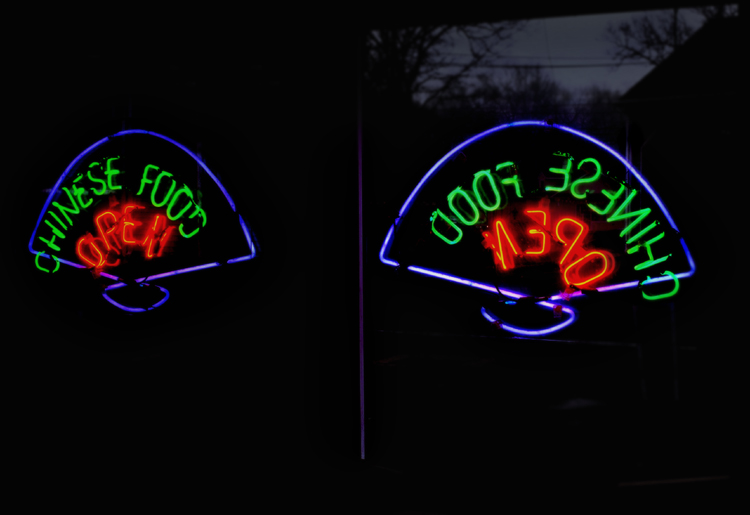
It's lowlight performance has been excellent - rangefinder handholdability and ease of focusing plus good performance at high iso. This shot was taken at iso 800, f/2 and 1/30. I like the results. Film-like, for lack of a better word. It does not scream digital.
Plus I get to play around and get images that I never would have gotten with film (duh, since I shoot black and white film 99% of the time).

1.13.2007
Epson R-D1 First Impressions
 No, I just can't justify spending an obscene (to me) amount of money for Leica's new M8.
As luck would have it, I came upon a very lightly used Epson R-D1 from an RFF member who was "upgrading" to the M8. Even the R-D1 was much more than I wanted to spend back when it was introduced a couple of years ago. Well, not anymore. Yes, refurbs of the R-D1 go on sale from time to time online at the Epson store (and they sell like hotcakes). However, the R-D1 had a known QC problem, and I had always been wary that refurbs were the once defective units sent back to Epson for one reason or another. In Darwins view, not the fittest.
Well, anyway, thanks to the R-D1S and now, the M8, very good used samples of the older RD-1 can be had at moderate prices. And since these have been "tried and tested," this may be a way to obtain one with less risk of getting a lemon. And if you are lucky, you may just get one that is almost new. Plus some goodies like extra ($$$) batteries and memory cards. Of course, if you are not the type who has to have the latest toy on the block, then it is always nice to have someone else eat the initial depreciation. As Gene Wilburn so eloquently put it, ahh... "the joys of bottomfeeding."
The difference between the R-D1 and the newer R-D1S? Mainly an updated software... a free download from Epson UK (mine came with the updated v2 software). The older R-D1 also had the advantage of having the RF adjustment screws easily accessibly simply by removing the hotshoe. With the R-D1S, the top plate has to come off. A daunting affair.
Back on topic, my R-D1 came this week. Cosmetically, it looks brand new. Funtioning perfectly, with no misalignment of the finder. Initial tests showed a few dead pixels, but after running the dead pixel mapping function in the new software, these were history.
I have been very, very impressed so far. It feels well-built, with a substantial magnesium alloy body. The rubber surfaces grip well. The funky analog guages actually work very simply, and with one glance, you have all the important information (WB, Image Quality, exposure left on card, and battery charge) on hand. ISO is adjusted like film speed on the Bessa, by lifting an outer ring on the traditional shutter speed dial. The dial also incorporates exposure compensation settings for when you are shooting in AE mode.
Here are the things that make the R-D1 unique, and appealing to me:
1. You can go about shooting all day without ever having to go into a single menu.
2. The thing I hate most about using digital is the small viewfinders and godawful tunnel vision that plague DSLR's other than the fullframe Canons. With the Epson, it is no different than shooting with a Bessa R3a - a bright, lifesize 1:1 finder.
Only the area of the framelines have changed to accomodate the 1.5x crop. My 35mm Summicron is now an effective 50mm. My 50mm is a portrait lens. I don't use the 28mm focal length much aside from the excellent ones built into my Ricoh GR-1 (and GRD), but that would give, roughly, a 40mm.
This is what I miss most, since 35mm is my favorite focal length. To get it, I would need a 24 or 25mm lens, and an accessory viewfinder. I have not tried this combination yet.
3. The R-D1 feels and handles like a rangefinder film camera. That means I can reliably shoot it handheld at 1/15 sec, I can use my M- and LTM- lenses, I can carry it all day without being bulky, obtrusive, or intimidating. In short, I have the same pleasurable rangefinder experience, with the "advantages" of digital.
4. All would be for naought without the results. True, the R-D1 has only 6 megapixels (funny, most people thought that was enough last year), but the results are very nice. Black and white shots have a smooth range of tones. Not too contrasty or oversharpened. Not "plasticky" or unnatural. To my taste, it gives results similar to newer, less grainy film emulsions like TCN or Neopan.
These past few days, I have been using the R-D1 almost exclusively with the LCD flipped closed, and in a leather halfcase (in case I get the urge to chimp) borrowed from my Hexar RF. I can also do away with the case, and attach a Photoequip Unigrip with no need of modifications.
It was not long before I forgot that I was shooting with digital. Until I had to crank up the ISO from 200 to 1600 between shots. Nice.
1.09.2007
Alchemy
A large part of the fun in photography actually comes after the shutter has been pressed. Well, for me at least. A lot of the "magic" happens in the dark - mixing different concoctions of chemicals, strict recipes for temperatures, volumes, agitation times, etc, all leading to the climax, the moment the image appears from seemingly nothing. Magic.
One thing great about using film is that there are so many possible combinations of film and developer, all with slightly different results. Add to that the variation in film exposure time, developer concentrations, as well as processing time. So much flexibility and control.
For the sake of uniformity, I have settled on a few combinations which have given me the particular look that I like:
 I like to shoot wide open, or fairly close to it, especially with Leica lenses. This is their forte. For the past 2 years, I have been shooting mainly with Agfa APX 100 as my slow film. I like the results I get when developed with Rodinal. Really special. Unfortunately, both have been discontinued.
 For medium speed, I have settled on the combination of Ilford HP5 and Kodak HC-110 developer. Another match made in heaven.
 The few times I needed fast film, I had been satisfied with the results I got from Ilford Delta 3200. I have not used it enough to try processing it myself. Many people have also been happy with Neopan 1600. I guess I will try that next time I find the need.
 I have not been doing much "pushing" of film. I have played around a bit with TriX at ISO 1600, and partial stand development in Rodinal. There have been some excellent results posted in RFF by guys who do this quite regularly, found in the darkroom section.
One thing great about using film is that there are so many possible combinations of film and developer, all with slightly different results. Add to that the variation in film exposure time, developer concentrations, as well as processing time. So much flexibility and control.
For the sake of uniformity, I have settled on a few combinations which have given me the particular look that I like:
 I like to shoot wide open, or fairly close to it, especially with Leica lenses. This is their forte. For the past 2 years, I have been shooting mainly with Agfa APX 100 as my slow film. I like the results I get when developed with Rodinal. Really special. Unfortunately, both have been discontinued.
 For medium speed, I have settled on the combination of Ilford HP5 and Kodak HC-110 developer. Another match made in heaven.
 The few times I needed fast film, I had been satisfied with the results I got from Ilford Delta 3200. I have not used it enough to try processing it myself. Many people have also been happy with Neopan 1600. I guess I will try that next time I find the need.
 I have not been doing much "pushing" of film. I have played around a bit with TriX at ISO 1600, and partial stand development in Rodinal. There have been some excellent results posted in RFF by guys who do this quite regularly, found in the darkroom section.
1.06.2007
770: Deus Ex Machina
 Vast collection of Ralph Gibson's work from 1960-1999, with over 800 richly reproduced photos in a heavy brick of a paperback.
Thought-provoking. It urges you to expand your horizons beyond the classic street photography cliche that every HC wanna-B seems to be striving for (worthily, mind you), and to think outside of the box.
The book is short in words, but here's a valuable quote:
One day Dorothea (Lange) looked at my photographs and told me, "Your problem is that you don't have a point of departure. If you are going down to the drugstore to buy toothpaste and have your camera with you, the chances of making an important photograph are greater than if you just stand on the street corner waiting for something to happen." I promptly returned to the street corner. It was only years later while working on The Somnambulist that I finally understood the wisdom of her admonition. Since then I have always worked with a point of departure. Every photograph is relevant to an idea that is being examined, a series, or a book. Within this matrix infinite possibilities remain but the chaos is diminished.
(Since this is the first Book post of 2007, let me repost this: 770? In case you haven't figured it out yet, that's the Dewey Decimal Classification number for Photography and Photographs. I figure that in the future, it would similarly help search for these blog entries.)

1.05.2007
Facelift
The Chum Bucket gets a new look for the New Year. I gotta say, the new blogger interface is much more user-friendly. Some of the photo layout in the older posts got a little bit messy, but I can live with that.
I am keeping the old format of The Itinerant Photographer for now. I want to live with both for a little bit. I have also been migrating most of the photos to flickr, so the photoblog has become sort of redundant. I may end up just maintaining one (this) blog. We'll see.
Let me know how you like it.
I am keeping the old format of The Itinerant Photographer for now. I want to live with both for a little bit. I have also been migrating most of the photos to flickr, so the photoblog has become sort of redundant. I may end up just maintaining one (this) blog. We'll see.
Let me know how you like it.
Picture-A-Week: Why Bother?
What did you expect? It IS the New Year, and it is time for resolutions.
I have never tried to start a PAW (Picture-A-Week) project, but there really is something to be said for people who have the discipline and stamina to come up with a photo every week for 52 weeks. Inevitably, the idea came again this year, mainly spurred by a recent thread on RFF to start a PAW project.
Time to do some thinking.
Let's face it, when you are in a beautiful place, photographs come more easily. Especially if the place is new, or novel, to you. Good photos? I don't know, but proportionally, you're bound to get more of those as well.
"Photographers shoot too much film! If you go to the barnyard even a blind chicken can find grain." -- Andre Kertesz (excerpted from Deus Ex Machina, by Ralph Gibson).
But what about the ordinary? I think that's where a PAW may help. To see the extraordinary in things that you probably see everyday. Seeing. Photographically. That is a worthy goal.
"Everything is a subject. Every subject has a rhythm. To feel it is the raison d'etre. The photograph is a fixed moment of such a raison d'etre, which lives on in itself." -- Andre Kertesz (again!).
At the very least, it should be fun.
RFF PAW Project links to participants, courtesy of gregg.
RFF PAW 2007 Flickr Pool.
I have never tried to start a PAW (Picture-A-Week) project, but there really is something to be said for people who have the discipline and stamina to come up with a photo every week for 52 weeks. Inevitably, the idea came again this year, mainly spurred by a recent thread on RFF to start a PAW project.
Time to do some thinking.
Let's face it, when you are in a beautiful place, photographs come more easily. Especially if the place is new, or novel, to you. Good photos? I don't know, but proportionally, you're bound to get more of those as well.
"Photographers shoot too much film! If you go to the barnyard even a blind chicken can find grain." -- Andre Kertesz (excerpted from Deus Ex Machina, by Ralph Gibson).
But what about the ordinary? I think that's where a PAW may help. To see the extraordinary in things that you probably see everyday. Seeing. Photographically. That is a worthy goal.
"Everything is a subject. Every subject has a rhythm. To feel it is the raison d'etre. The photograph is a fixed moment of such a raison d'etre, which lives on in itself." -- Andre Kertesz (again!).
At the very least, it should be fun.
RFF PAW Project links to participants, courtesy of gregg.
RFF PAW 2007 Flickr Pool.
1.01.2007
New Directions
I tried my hand at making a video presentation today. The compression used by the YouTube server degrades the photo quality somewhat. I will need to look into that, as well as how to convert the Windows Movie Maker file to an ipod compatible format.
Addendum: Some more RFF members' video essays on YouTube.
Addendum: Some more RFF members' video essays on YouTube.
Subscribe to:
Posts (Atom)